This is the last of my three daily posts about my 3-Day Novel contest. There will be two more posts in the days following the Labour Day weekend. One will share some wrap up details, while the other will share some content details, as well as trials and tribulations that came with getting that content.
As per the note left on my Day 1 post that was originally supposed to encompass the entire 3 day Labour Day weekend, I am now moving to doing three posts about the experience. I am writing enough to do three posts so why not? It keeps it more manageable for readers.
This post will expand as the day goes on. I will update last time of update on the first line as updates beyond the first one take place.
Blowin’ in the Wind is a Bob Dylan classic that is not only simple in its chording, but can also be played in 3 different keys without needing any difficult chords or capo. That means no bar chords, or even chords requiring 4 fingers! You can play and sing it in the keys of A, D or G, depending on where you vocal range lies.
Or you can do it in all three keys as I have arranged and shown in the video below! You play and sing each verse in a progressively higher key as the urgency grows in the lyrics. Notes are included in the printable guitar and ukulele tab PDFs below the video.
Despite some major upsets like #1 Pitt going down, President Obama’s 2011 NCAA March Madness Barackets is now ahead of 99.9% of ESPN brackets after two rounds!
That is behind 7,548 entries, but ahead of about 6 million others!
That’s also a gain of 0.1% from Round 1. Not much, maybe, but it’s not like da Prez had much room to progress standing at 99.8th percentile after Round 1. To gain against the best of the best is outstanding!
Da Prez really has his March Madness mojo going this year! See his Barackets after Round 2 below.
The average Facebook user today has 130 friends. But how many of them would that average user really call a friend? And by friend, I mean just “friend”. I don’t mean anything like “true friend”, “real friend”, “good friend” or the like. Just someone you’d call a friend.
That would be hard to get a consistent answer since different people have different standards for who they call a friend. For some, only the truest of friends get called a friend. For others, anyone who might have followed them on Twitter, or vice-versa, counts as a friend. What we need is some sort of standard definition for “friend” to move this forward.
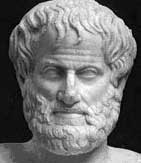
Aristotle
Interestingly, a good definition for “friend” can be found over 2300 years ago courtesy of the Greek philosopher Aristotle (384 BC – 322 BC).
Contactsor those based on usefulness or utility, sometimes known as acquaintance;
Drinking buddiesor those based on pleasure (to use the word conservatively); and
Good friendsor those based on shared virtues.
If we accept all three of these categories to be friends, as Aristotle called them three types of friends, we then have a pretty broad definition of friend, but one which I would be happy to accept. Question then is if these definitions are still broad enough to cover how most people decide whether or not to add others as friends on Facebook. That would take a lot of resources to not only survey but to also verify. I doubt the folks at Facebook would even be able to do the latter conclusively, though I think they have a pretty good idea along the same lines I do.
From what I have seen and read of people and how they use Facebook, as well as who uses them and how, I would argue that a lot of people’s Facebook friends fall outside of Aristotle’s definition. So one would either need to expand Aristotle’s definition of friends to include these slightest of Facebook friends, or these slightest of Facebook friends aren’t really friends.
At first glance, Aristotle’s contactscategory seems broad enough. After all, these slightest of Facebook friends are often people a user would have met only once, if that. They probably serve only as potential usefulness, never mind true utility. That is, they get added cause one never knows when they might be useful, not that they are likely to be useful in some way. Many people have Facebook friends just for the sake of upping their count and feel more people are paying attention to their Facebook activity. Others to avoid some situational awkwardness, like being Facebook friends with someone’s partner just because s/he is the jealous type who wants to keep an eye on their partner’s Facebook activities, when one doesn’t really give a damn if they exist. However, this adding of potentially useful friends can only happen to a point before users would not be able to remember people on their Facebook friends list. That is, if you asked them if so and so were on their Facebook friends list, they wouldn’t be able to tell you with certainty. Or if you asked them the name of certain people who are actually on their Facebook friends list, they wouldn’t be able to tell you anything about them at all, including how they got on that list in the first place.
I don’t know what the approximate average number of Facebook friends one would need to have before they would start forgetting everything about someone on that list, but I can tell you the situation would be true for some Facebook whales. That’s the term Facebook has for Facebook users with over 1,000 friends. Seriously, one thousand people is a lot of people to remember names and something about them. But if you don’t buy that people can remember details about a thousand mostly generic people, perhaps you’d believe the situation of not being able to remember anything about some Facebook friends would be true for those who have reached Facebook’s friends list limit of 5,000. Yes, there are those, too.
Poor Aristotle must be turning over in his grave at what some people constitute as friends today, though I’m sure he wouldn’t expand his definition of friends but rather state those slightest of Facebook friends are truly friends at all.
So after all that, maybe you’d like to weigh in with some opinions with a comments, like how you’d define a friend or why you keep Facebook friends you might not remember anything about, etc. Or maybe you’d just like to take some polls on Facebook friendship below (or see how others responded). The sample from this blog will be skewed because a lot of people come here for Facebook related activities so they tend to be avid Facebook users, but I’m just curious to see.
Other Facebook user facts:
Canada has the 4th highest Facebook user rate per capita as of June 2010 with 47.9% of Canadians having a profile. This trails only Iceland (59.6%), Norway and Hong Kong, in that order.
Canada has the highest Facebook user rate per capita among nations with 10 million citizens or more.
There are 16 million Facebook users in Canada.
Quit Facebook Day is May 31. A measly 30,000 quit worldwide of about 465 million users. Most “I Hate Facebook” type groups and pages are actually hosted on Facebook.
Canada signed up 912,000 new users in May 2010 alone.




 Digital Citizen