Without the sad times,
the happy times would not be so enjoyable
 Minh Tan (see haiquote version)
Without the sad times,
the happy times would not be so enjoyable
Minh Tan (see haiquote version)
There is a Facebook Community (sort of like a wiki on Facebook after enough people are part of it) called the 30 Day Song Challenge, with over a million users who “Like” it! The idea is that you share a song of certain meaning to you each day on your Facebook profile. It’s a great idea, this song a day sharing thing. I’ve created a few myself earlier this year without knowing about this concept, with the 28 great love songs in February and Top 10 Bob Dylan songs leading to his 70th birthday in May 2011. Both were intended to be theme focused, though, unlike this meme that is more about variety.
However, despite being about variety, the 30 themes for the Facebook 30 Day Song Challenge were a bit too similar, repetitive, anti-climatic and dated for my liking, and also not universal enough:

.
Daniel J. Levitin wrote an absolutely brilliant book called The World in Six Songs, supported by a great website with the many music samples referenced, among other great related material.
My basic paraphrasing of the concept is this. All the songs in the world could be fit into at least one of six categories providing an evolutionary benefit to humanity, often ultimately tied to our social nature.
The book and website offer far more detailed interpretations, of course, but I will expand on my paraphrasing with each post and the associated topic.
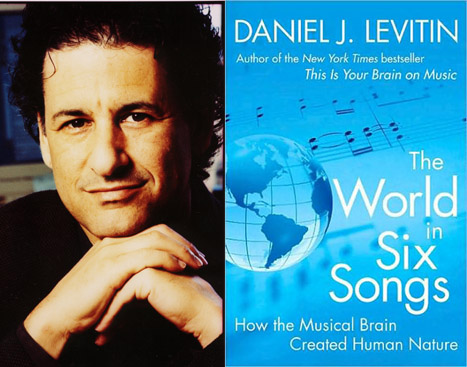 In a series of posts, I will describe each of the six categories in brief, one at a time:
I will describe what the categories are about because they are not as limited in scope as the category names suggest. I will then supply one of my choices and ask all readers to do the same if they so wish. In the seventh post of the series, I will offer the chance to put the song choices all together so readers can read the entire set on one post. I do this because it would be a long post to describe all six categories at once, but to have all the answers in one place might be nice.
.
July 30th add-on in italics, from Dan Levitin in a summary article
This category of song provides comfort in times of loneliness, stress or heartbreak, along with the classic comfort song, the lullaby. Music written about loneliness and stress can provide us with comfort by assuring us we are not alone in our grief or misery, aiding the recovery process. Lullabies mutually calm mother and child, and may release prolactin, while at the same time providing a bond between the two, which is beneficial for the child.
These songs make us feel more comfortable, whether by easing us into more comfort or relieving us of discomfort. Often, it is the latter, and often through letting us know we are not alone in whatever predicament the songs are trying to relieve us of, that we have a place in the greater whole. Sometimes, songs of Comfort may overlap with Friendship / Bonding category, but should only be considered as such if they were also motivating one to bond or forge direct relationship. If one truly wanted to fit a song into only one category, should the encouragement to bond be present, then consider the song a Friendship / Bonding song, not a comfort song. Encouragement to bond in a way related to “love” will be dealt with later but that also trumps the Comfort category if there were two possibilities and one only wanted to fit a song into solely one category.
Sad songs are the most common form of Comfort songs, but so are lullabies and blues. Comfort songs’ benefit to our evolution is that they cause the release of prolactin, a tranquilizing hormone that comforts us, among many other purposes. Obviously, comfort during times of stress, or even just more comfort in good times, benefits our survival.
Audio sample of songs from the Comfort chapter in The World in Six Songs can be found on the website. No direct link was available, but click on the Songs menu option and appropriate page number range link carrying pages 111 to 136. Please note that not all songs are meant as samples of Comfort songs. Some are just referenced material in the book text.
.
.
Solitude, as sung by Billie Holiday (lyrics).
Written by Eddie Delange, Irving Mills, Duke Ellington, this bluesy jazz standard talks about a person in solitude longing for her (or his) lover who has left her/him. However, because the singer sings it like it’s happening to her, the listener regards it as someone else going through the same situation. As for my insistence upon the Billie Holiday version, well, let’s just say there’s nobody who knows how to make a song sadder than Billie. She’s got an album titled Lady Sings the Blues, for which she wrote the title track, for a very good reason. I could actually listen to any Billie Holiday song, sad or happy, and I would feel better if I were feeling sad. She’s got that “honest signal” quality in her singing to persuade the listener she knows what she’s talking about rather than faking it. “Honest signal” is discussed by Daniel Levitin in the Love chapter as being regarded as superior to speech because it is more challenging to fake singing an emotion than talking about it.
.
Please leave your choice as a comment.
Lyrics and YouTube/audio link would greatly enhance your answer so readers can know more about your choice. They are not necessary, though, and not possible if no lyrics or version exist.
You can include songs you wrote as a choice, too!
Flesch-Kincaid Grade Reading Level: 10.1
I did not create these emoticon Facebook tagging memes, and I do not know who did to link them to the source. However, I did touch up some of them to optimize them in size for Facebook, and a few I found as graphics searching for pictures that could be used for Facebook tagging. If you like descriptions with your emoticon and smiley memes, try the Emoticons & Smileys without Descriptions post.
To use any of these for your Facebook tagging fun:
Please click here for a complete list of over 100 Facebook picture tagging memes on this site with which you can use for fun with your friends.
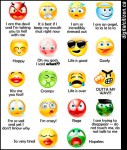
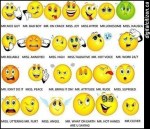
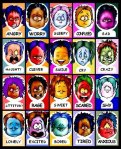
I did not create these three Facebook picture tagging memes, but I either adopted a graphic for Facebook tagging usage (expressions with the lady below), or improved their quality and optimized their make-up for Facebook usage. The ones I improved on, I do not know from where they come so there is no source link.
These memes involve facial expressions. To use any of these for your Facebook tagging fun:
Please click here for a complete list of over 100 Facebook picture tagging memes on this site with which you can use for fun with your friends.


 Digital Citizen