Last winter, I was taught how do make a lingerie slip in my Sewing Guild from a free online version called The Ruby Slip. I had to do a bust adjustment beyond what was the range in the pattern, but otherwise, put it together as shown. Well, I added trim and that flower pattern was purple and white shear on top of the shiny purple polyester seen in the rest of the garment.
pattern
1701 Tuque (double layered fleece)
This was the third tuque I made from my recently designed and fitted one piece double layered tuque pattern shown below. The ability to put something larger than a panel on the tuque is why you’d want to really use this pattern, as well as better durability, compared to the multiple panel patterns you usually find out there. Here, I grabbed some portraits of The Original Series Star Trek Enterprise crew from a cotton print, and appliquéd them onto the flat fleece before sewing together to form a shaped tuque.
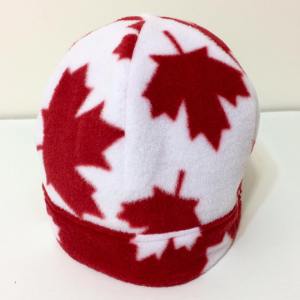
CANADIANA Tuque (double layered fleece)
I needed some properly fitting tuques with winter coming so I took it upon myself to create a design that was extremely warm, durable and had some flexibility for design. This was the first of three very different looking design tuques that I made, but which was essentially all from a one piece pattern to yield a double layered fleece tuque.
An Origami Crease Pattern Quilt, or Origami Quilt?
I recently came across some fantastic information on origami (paper folding) like this mind blowing talk from Robert Lang.
In it, he talks about crease patterns, which are mostly square pieces of paper with all the creases required to make an origami drawn on to it. For example, this crease pattern
My First Ao Dai
Recently, I submitted an entry into a sewing contest. For it, I motivated myself to finally learn how to make an ao dai (ow-yai, meaning long garment), the national garment of Viet Nam, my country of origin. I used a pattern for a base, Folkwear 139. However, I customized it to fit a 5’10” friend who was my sewing model. I also fixed how the shoulders were done because sewing it as instructed left a very jagged shoulder “dart”, which was essentially what I was doing more than sewing it together as a seam. Then I extended the neck line from the body up so it didn’t leave such a big collar. Finally, on my real garment, I redrafted the front and back pieces to remove the vertical darts so as not to disturb the beautiful big print, and took out a dart on the sleeve.