Note: Since this posting, I have evolved Facebook picture tagging memes on my own ideas far beyond this concept I saw. My ideas involve real world and life actions rather than just associating ideas. They are listed under the Action memescategory, involving what I call Facebook 2.0 tagging memes.
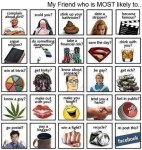
The pictorial Facebook tagging memes that have been going around in many variations seems to have evolved into that common high school year book feature, the Most Likely To… page. I saw one just hours ago, but it was so poorly done (mostly due to almost unreadable small type) I went and created my own, text, picture compilation and all. Here’s how to get it:
Click on the picture below to get it at full size.
Right click on that picture and save to your computer.
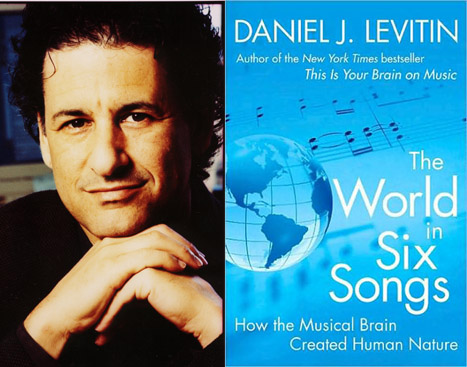
Daniel J. Levitin wrote an absolutely brilliant book called The World in Six Songs, supported by a great website with the many music samples referenced, among other great related material.
My basic paraphrasing of the concept is this. All the songs in the world could be fit into at least one of six categories providing an evolutionary benefit to humanity, often ultimately tied to our social nature.
The book and website offer far more detailed interpretations, of course, but I will expand on my paraphrasing with each post and the associated topic.
In a series of posts, I will describe each of the six categories in brief, one at a time:
I will describe what the categories are about because they are not as limited in scope as the category names suggest. I will then supply one of my choices and ask all readers to do the same if they so wish. In the seventh post of the series, I will offer the chance to put the song choices all together so readers can read the entire set on one post. I do this because it would be a long post to describe all six categories at once, but to have all the answers in one place might be nice.
.
This post focuses on Songs of Comfort
July 30th add-on in italics, from Dan Levitin in a summary article
This category of song provides comfort in times of loneliness, stress or heartbreak, along with the classic comfort song, the lullaby. Music written about loneliness and stress can provide us with comfort by assuring us we are not alone in our grief or misery, aiding the recovery process. Lullabies mutually calm mother and child, and may release prolactin, while at the same time providing a bond between the two, which is beneficial for the child.
These songs make us feel more comfortable, whether by easing us into more comfort or relieving us of discomfort. Often, it is the latter, and often through letting us know we are not alone in whatever predicament the songs are trying to relieve us of, that we have a place in the greater whole. Sometimes, songs of Comfort may overlap with Friendship / Bonding category, but should only be considered as such if they were also motivating one to bond or forge direct relationship. If one truly wanted to fit a song into only one category, should the encouragement to bond be present, then consider the song a Friendship / Bonding song, not a comfort song. Encouragement to bond in a way related to “love” will be dealt with later but that also trumps the Comfort category if there were two possibilities and one only wanted to fit a song into solely one category.
Sad songs are the most common form of Comfort songs, but so are lullabies and blues. Comfort songs’ benefit to our evolution is that they cause the release of prolactin, a tranquilizing hormone that comforts us, among many other purposes. Obviously, comfort during times of stress, or even just more comfort in good times, benefits our survival.
Audio sample of songs from the Comfort chapter in The World in Six Songs can be found on the website. No direct link was available, but click on the Songs menu option and appropriate page number range link carrying pages 111 to 136. Please note that not all songs are meant as samples of Comfort songs. Some are just referenced material in the book text.
Written by Eddie Delange, Irving Mills, Duke Ellington, this bluesy jazz standard talks about a person in solitude longing for her (or his) lover who has left her/him. However, because the singer sings it like it’s happening to her, the listener regards it as someone else going through the same situation. As for my insistence upon the Billie Holiday version, well, let’s just say there’s nobody who knows how to make a song sadder than Billie. She’s got an album titled Lady Sings the Blues, for which she wrote the title track, for a very good reason. I could actually listen to any Billie Holiday song, sad or happy, and I would feel better if I were feeling sad. She’s got that “honest signal” quality in her singing to persuade the listener she knows what she’s talking about rather than faking it. “Honest signal” is discussed by Daniel Levitin in the Love chapter as being regarded as superior to speech because it is more challenging to fake singing an emotion than talking about it.
.
What is your choice for Song of Comfort?
Please leave your choice as a comment.
Lyrics and YouTube/audio link would greatly enhance your answer so readers can know more about your choice. They are not necessary, though, and not possible if no lyrics or version exist.
Daniel J. Levitin wrote an absolutely brilliant book called The World in Six Songs, supported by a great website with the many music samples referenced, among other great related material.
My basic paraphrasing of the concept is this. All the songs in the world could be fit into at least one of six categories providing an evolutionary benefit to humanity, often ultimately tied to our social nature.
The book and website offer far more detailed interpretations, of course, but I will expand on my paraphrasing with each post and the associated topic.
In a series of posts, I will describe each of the six categories in brief, one at a time:
I will describe what the categories are about because they are not as limited in scope as the category names suggest. I will then supply one of my choices and ask all readers to do the same if they so wish. In the seventh post of the series, I will offer the chance to put the song choices all together so readers can read the entire set on one post. I do this because it would be a long post to describe all six categories at once, but to have all the answers in one place might be nice.
.
This post focuses on Songs of Joy
July 30th add-on in italics, from Dan Levitin in a summary article
Joy songs are associated with celebration, moments that inspire people to sing, jump, dance and shout. It has been shown that singing releases oxytocin (the hormone released during orgasm), and music listening releases serotonin (a mood-regulating neurotransmitter commonly used in antidepressants). The positive effect of singing or listening to music has also been found to have a positive effect on the immune system, which creates an evolutionary advantage.
These songs celebrate something and reward us for actions that benefit our survival so we would do it again to further improved the odds. “Rewards” are in terms of brain chemicals like oxytocin and serotonin, we naturally release when we feel happy or having performed acts which make us happy. Rewards could also come in reductions of chemicals which do not make us happy, like cortisol and prolactin, which may lead to actions the reduce our chances of survival like violence, reduced physical growth, depression, etc. Additional action of celebration benefits us in a wide range of ways, from the seemingly trivial to the more internal and less visible, like:
Dancing, stretching, jumping or other natural movements to music which are good for our physical well-being;
True emotions, which arise out of benefiting our survival.
In a fascinating argument which I buy into, Daniel Levitin argues that emotions like jealousy are not “true” emotions. Rather, they are “adaptations” to adversity to minimize harm rather than directly benefiting our survival directly. They do not “reward” us in the sense of making us want to repeat actions over and over to benefit our survival. Daniel didn’t say the latter, stating nature does not build systems which defeats itself. However, in trying to keep things simple, that was my conclusion. No doubt, while there are insecure people jealous of everyone else for any number of reasons, most of us would readily admit we could do without jealousy in our lives if we could.
We possess the reward systems of joy today because those of us who enjoyed music of joy, like any of the other categories, were the ones who survived to successfully pass on the genes that allow us to enjoy such music.
As an additional point, Daniel Levitin did not address funny songs in his book. At least I didn’t find anything obvious. One could easily argue that they fall under songs of Friendship because laughing together promotes stronger relationship. I, for one, totally believe that as a major icebreaker to break cultural barriers, to me, is if you can learn to laugh at yourselves and then at each other. But even more, I believe in that anecdote that laughter is the best medicine, and as a result, laughing is good for survival and evolution. So if songs of Joy rewards us for things we should try to do more and more of, songs that makes us laugh should fall here.
Audio sample of songs from the Joy chapter in The World in Six Songs can be found on the website. No direct link was available, but click on the Songs menu option and appropriate page number range link carrying pages 83 to 110. Please note that not all songs are meant as samples of Joy songs. Some are just referenced material in the book text.
It is a joyful song, for sure, and one that definitely makes me want to get out of my seat and dance. I’m standing over the keyboard dancing right now as I’ve got the YouTube version playing to get the link for it! However, this is by no means a definitive choice for me. I can’t say songs of Joy are among the most prominent songs on my mind. I’ve got tons of them as it makes it easier to become happy that way, but in terms of distinctive favourites, none grabs me enough to say “yeah, that’s the one!”
Now, if you’re talking songs of Joy as in humour, my choice would be Nellie McKay‘s Clonie (partial lyrics). Good songs of humour are rare for me, but this one does the job well. I love a lot of her witty, funny and charming music, which I only discovered recently.
.
What is your choice for Song of Joy?
Please leave it as a comment.
Lyrics and YouTube/audio link would greatly enhance your answer so readers can know more about your choice. They are not necessary, though, and not possible if no lyrics or version exist.
Daniel J. Levitin wrote an absolutely brilliant book called The World in Six Songs, supported by a great website with the many music samples referenced, among other great related material.
My basic paraphrasing of the concept is this. All the songs in the world could be fit into at least one of six categories providing an evolutionary benefit to humanity, often ultimately tied to our social nature.
The book and website offer far more detailed interpretations, of course, but I will expand on my paraphrasing with each post and the associated topic.
In a series of posts, I will describe each of the six categories in brief, one at a time:
I will describe what the categories are about because they are not as limited in scope as the category names suggest. I will then supply one of my choices and ask all readers to do the same if they so wish. In the seventh post of the series, I will offer the chance to put the song choices all together so readers can read the entire set on one post. I do this because it would be a long post to describe all six categories at once, but to have all the answers in one place might be nice.
.
This post focuses on Songs of Friendship
July 30th add-on in italics, from Dan Levitin in a summary article
Friendship songs centre around group cohesion, whether it be for war, or the bonding of different cliques in high school. For example, in prehistoric warfare, attackers would sometimes ambush another tribe using loud instruments (especially drums) to surprise the targets while they were still sleeping. Countertactics employing the use of singing may also have been used as a signal that the group was awake. These songs serve to protect a tribe/group or succeed in the takeover of another. In the context of social groups, they provide a sense of community and belonging, bringing people together.
These songs serve the purpose of bringing people together to promote cooperation in one form or another in order to survive, or at least make life more tolerable. Applied to various situations, cooperation could promote any of these situations:
Working together
Attacking/defending together
Supporting each other
Friendship
Averting conflict
Forging group identity (maybe not formally but like a bonding anthem for a group of “outcasts”)
Others
The evolutionary value is that humans interact socially, whether in friendly or destructive ways. If we can avoid the latter, like in wars, we are more likely to survive and thrive as a species. Our social bonds are essential to our well-being, and we do survive and thrive better in groups, so anything that helps us in these causes are beneficial to our evolution as a species.
Audio sample of songs from the Friendship chapter in The World in Six Songs can be found on the website. No direct link was available, but click on the Songs menu option and appropriate page number range link carrying pages 41 to 82. Please note that not all songs are meant as samples of Friendship songs. Some are just referenced material in the book text.
It fits into the Friendship subcategory of various bonding purposes, but I do believe that true friends ultimately help each other. There isn’t any other song I know and feel tells someone they’ve got a true friend better than this Carole King song. Nobody sings it better, either!
.
What is your choice for Song of Friendship?
Please leave your choice as a comment.
Lyrics and YouTube/audio link would greatly enhance your answer so readers can know more about your choice. They are not necessary, though, and not possible if no lyrics or version exist.
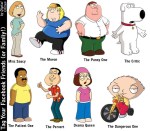
Here are some more Facebook tagging meme pictures I haven’t been able to find anywhere else easily, so I’ve put them on my blog. I created the Family Guy version, with relatively few characters compared to others I created thus far. However, I was only able to find graphics of those 8 characters with white backgrounds and that’s enough work to assemble them, label them and such for me on one post. It’s for the Family Guy fans, which I don’t think are quite at the level of the other meme themes (see links below), but I’ll let the download stats speak for themselves. It’s also for people who don’t have time to tag 25 people, or daring ones who not only have their family as friends, particular Parents, but will also tag them! This is also the first time I created a pictorial Facebook meme with personality traits rather than straight character names.
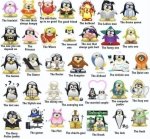
The other two meme pictures here are Disney characters and Penguins (somebody need to enlighten me on the cartoon franchise from which they came). The first penguins version I created. The others I only slightly optimized ratios and edited out one extreme expletive that was simply gratuitous, and it wasn’t even funny. I’m glad someone did the personality labeling for Disney characters because I sure didn’t want to try. I had thought about a Disney set but passed it up due to too many characters without prominent distinguishing personality traits. As for the Penguins set, not knowing anything about it really, it’s just included. Here’s how you get any of these graphics for Facebook:
Click on the picture below to get it at full size.
Right click on that picture and save to your computer.



 In a series of posts, I will describe each of the six categories in brief, one at a time: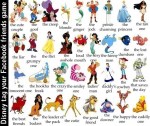

 Digital Citizen