How Canadians Died in 2007

Statistics Canada released its Mortality, Summary List of Causes 2007 (1.0 MB PDF) today, with a ton of tables on causes of death, by provinces, territories and country, gender, age, etc.

As morbid as it may sound, I thought it was a rather interesting document to browse through. It’s not because I wanted to know about all the ways that people died, in summary groups, but rather how they compared to each other. We often hear about stats on various diseases, accidents, criminal activities and other causes of death. However, it’s often without context, like how does it really compare to other causes since lots of people die every day, or the context whoever is trying to persuade you of something wants you to hear. In other words, death stats are often presented to you in propaganda format. Lobbying format if you want to be kinder.

What the tables in the Mortality Summary List does is let you go through those numbers yourself, though they would generally be of more interest to Canadians since it is about Canadians. See the big and the small numbers of deaths and their causes. Which ones topped the list? Find the causes you’re interested in and see how the number who died compared to other causes. How does cancer compare to car accidents? Is AIDS that prevalent any more? See how it is in your province or territory. Are the top causes the same? Maybe even make comparisons, though you’ll have to do a per capita (per person) or percentage type of calculation to have a fair comparison in some cases. The Mortality Summary List even provided some of those calculations for you!

You’ll never had such a clear idea of what Canadians died of in your life! Were things the way you thought they were? You may want to rethink some things about various issues related to death, whether disease, crime or otherwise, especially where priorities should be put.

Makes for a great school project or presentation, too! Do it well and I promise show and tell won’t have been this interesting in a long time! 🙂

It is too bad this data is relatively old, being for the year 2007 when we are almost nearing the end of 2010. StatCan is generally pretty good at being far more up to date than that. Odd, though, that they have economic data for so many things up to the month when what’s called vital statistics such as this lags almost 3 years behind. However, unless there were some shocking new trend, and I mean shocking by numbers, not by gruesome image or high profile media stories like shark attacks, things won’t have changed much. You’re still getting a pretty good idea of what’s happening. That said, in 2007, deaths by major cardiovascular (heart) disease passed deaths by cancer for the first time in 10 years, though the trend had been predictable from previous years. Together, heart disease and cancer combined for a staggering 59% of all Canadian deaths in 2007.

Can you see the impact of obesity on society coming? Who wants to bet this order remains the same for most of the next 10, maybe even 20 years?

Anyway, it isn’t morbid to mull over stuff like this. Death is a part of life. While this is not a spiritual examination like my philosophy in the previous sentence often suggests, it is a social understanding of it for Canadian society.

And whatever tangents your mind goes on thinking about death, it certainly is a lot to think about!

Seriously, it’s not a morbid exercise. Quite enlightening, in fact. I hope you give it a look.

I’d should do some research to find an American equivalent to have a look. I bet that’d be real interesting, too!

Some Thoughts and Statistics on the New Seaport Farmers’ Market in Halifax

The new Seaport Farmers’ Market in Halifax is almost in full swing now. It is now open 3 days a week, Fri-Sun, and much longer each day than the half day before at the old market that was open just once per week Sat morning. The future intent is for the new market to be open 6 days a week, though the farmers will only be there for 3. The other 3 days will only have craft sellers. It’s a nice big space and I love it, although I hear the busking musicians are disgruntled due to the open space leaving all of them to be heard so they have to compete to get above each other (The Coast, Sep 9 2010). Hey, I like the music and appreciate its contribution to the ambiance of a farmers’ market, but it’s a new farmers’ market building, not a concert hall.

I love the additional selection and larger stands, though I have to curb myself on the cooked food. It smells and tastes great, but just see how much raw food you can get for the same amount of money on a cooked plate, and you’ll not only see the value of labour to your food costs, but also where many of those cents to your food dollar that’s not going to the farmers end up going. Going there with someone who might expect you to buy something, which includes yourself, is also going to be costly with all the potential little craft trinkets you can buy for significant others, kids, etc. It’s great to see all the stuff, but is hard to resist. So far, I have bought nothing other than raw food from the farmers.

I’ll leave with some statistics about the farmers’ market scene in Nova Scotia and the Seaport Farmers’ Market, from various sources like The Coast paper and the Canadian Broadcasting Corporation (CBC).

  • 40 Nova Scotia Farmers’ Markets Sep 2010, few opened all week
  • New farmers’ market is in an R-2000 building (NRCan designation) that uses 85% less energy and 50% less water than old market
    R2000-standard PDF
  • New farmers’ market is twice the size of old market (which is still open) at 4,000 sq feet
  • 10,000+ visitors per Saturday (August figures, but is still as crowded as far as I can tell)
  • Total vendors increased by at least 50% between new and old markets opening, though not all are food vendors
  • NS Community Supported Agriculture farms (CSAs) and farmers’ market bring in about $90M a year (and growing) to farmers (includes prepared foods, possibly crafts, so can’t just take it against farm gate)

Earth Day Goal Update #5 – Eating Local for the Economy and Measuring It

Did you know that in Nova Scotia, farmers get 80 cents per food dollar spent when selling directly to customers, like at the farmers’ market, compared to 9 cents when selling to retailers? (The Coast, July 15 2010)
Continue reading

A Few Thoughts on Facebook Friends (and some polls)

The average Facebook user today has 130 friends. But how many of them would that average user really call a friend? And by friend, I mean just “friend”. I don’t mean anything like “true friend”, “real friend”, “good friend” or the like. Just someone you’d call a friend.

That would be hard to get a consistent answer since different people have different standards for who they call a friend. For some, only the truest of friends get called a friend. For others, anyone who might have followed them on Twitter, or vice-versa, counts as a friend. What we need is some sort of standard definition for “friend” to move this forward.

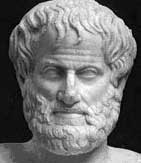
Aristotle

Interestingly, a good definition for “friend” can be found over 2300 years ago courtesy of the Greek philosopher Aristotle (384 BC – 322 BC).

According to Aristotle, there are three types of friends, in increasing level of strength and sincerity:

  1. Contacts or those based on usefulness or utility, sometimes known as acquaintance;
  2. Drinking buddies or those based on pleasure (to use the word conservatively); and
  3. Good friends or those based on shared virtues.

If we accept all three of these categories to be friends, as Aristotle called them three types of friends, we then have a pretty broad definition of friend, but one which I would be happy to accept. Question then is if these definitions are still broad enough to cover how most people decide whether or not to add others as friends on Facebook. That would take a lot of resources to not only survey but to also verify. I doubt the folks at Facebook would even be able to do the latter conclusively, though I think they have a pretty good idea along the same lines I do.

From what I have seen and read of people and how they use Facebook, as well as who uses them and how, I would argue that a lot of people’s Facebook friends fall outside of Aristotle’s definition. So one would either need to expand Aristotle’s definition of friends to include these slightest of Facebook friends, or these slightest of Facebook friends aren’t really friends.

At first glance, Aristotle’s contacts category seems broad enough. After all, these slightest of Facebook friends are often people a user would have met only once, if that. They probably serve only as potential usefulness, never mind true utility. That is, they get added cause one never knows when they might be useful, not that they are likely to be useful in some way. Many people have Facebook friends just for the sake of upping their count and feel more people are paying attention to their Facebook activity. Others to avoid some situational awkwardness, like being Facebook friends with someone’s partner just because s/he is the jealous type who wants to keep an eye on their partner’s Facebook activities, when one doesn’t really give a damn if they exist. However, this adding of potentially useful friends can only happen to a point before users would not be able to remember people on their Facebook friends list. That is, if you asked them if so and so were on their Facebook friends list, they wouldn’t be able to tell you with certainty. Or if you asked them the name of certain people who are actually on their Facebook friends list, they wouldn’t be able to tell you anything about them at all, including how they got on that list in the first place.

I don’t know what the approximate average number of Facebook friends one would need to have before they would start forgetting everything about someone on that list, but I can tell you the situation would be true for some Facebook whales . That’s the term Facebook has for Facebook users with over 1,000 friends. Seriously, one thousand people is a lot of people to remember names and something about them. But if you don’t buy that people can remember details about a thousand mostly generic people, perhaps you’d believe the situation of not being able to remember anything about some Facebook friends would be true for those who have reached Facebook’s friends list limit of 5,000. Yes, there are those, too.

Poor Aristotle must be turning over in his grave at what some people constitute as friends today, though I’m sure he wouldn’t expand his definition of friends but rather state those slightest of Facebook friends are truly friends at all.

So after all that, maybe you’d like to weigh in with some opinions with a comments, like how you’d define a friend or why you keep Facebook friends you might not remember anything about, etc. Or maybe you’d just like to take some polls on Facebook friendship below (or see how others responded). The sample from this blog will be skewed because a lot of people come here for Facebook related activities so they tend to be avid Facebook users, but I’m just curious to see.

Share/Bookmark

Other Facebook user facts:

  1. Canada has the 4th highest Facebook user rate per capita as of June 2010 with 47.9% of Canadians having a profile. This trails only Iceland (59.6%), Norway and Hong Kong, in that order.
  2. Canada has the highest Facebook user rate per capita among nations with 10 million citizens or more.
  3. There are 16 million Facebook users in Canada.
  4. Quit Facebook Day is May 31. A measly 30,000 quit worldwide of about 465 million users. Most “I Hate Facebook” type groups and pages are actually hosted on Facebook.
  5. Canada signed up 912,000 new users in May 2010 alone.

Other Facebook issue posts on my site:

The Prejudices and Privacy Perils of Facebook Quizzes

How to Get Rid of Your Facebook Past

25 Things For Facebook You Can’t Steal My ID With

25 Things You Gave on Facebook to Help Get Your ID Stolen

Una Guía de Netiqueta Práctica para Facebook


Share/Bookmark

Flesch-Kincaid Grade Reading Level: 8.6

Interesting Facts and Insightful Sayings for a Happy Mother’s Day

Mother's Day ComicHappy Mother’s Day, everyone! It’s the third biggest holiday next to Christmas and Easter, by some measures, although I have doubts that includes some non-Western holidays. However, if the world celebrated Mother’s Day, it would be easily the biggest holiday on the planet because we all have Mothers. Of course, we all have Fathers as well, but there aren’t nearly as many deliquent Moms as there are Dads so Mother’s Day would rule. It already does given Father’s Day doesn’t rank with Mother’s Day in the measure previously mentioned.

Continue reading