Guitar and Ukulele Tabs for Blowin’ in the Wind, in 3 Keys (Bob Dylan)

Bob Dylan

Blowin’ in the Wind is a Bob Dylan classic that is not only simple in its chording, but can also be played in 3 different keys without needing any difficult chords or capo. That means no bar chords, or even chords requiring 4 fingers! You can play and sing it in the keys of A, D or G, depending on where you vocal range lies.

Or you can do it in all three keys as I have arranged and shown in the video below! You play and sing each verse in a progressively higher key as the urgency grows in the lyrics. Notes are included in the printable guitar and ukulele tab PDFs below the video.

Continue reading

Ugly Stamps: A Song by Me

In the handful of times I have performed this song in public, I have jokingly introduced it as the song that might get me kicked out of the Commonwealth one day. That’s because it bemoans the state of the Canadian stamp with Queen Elizabeth II’s face on it on it as she ages. I don’t know why Canada Post decided to have an embossing of the Queen’s profile, like on the back of a coin, for many years during her youth, on its Queenie stamp. Then, sometime in late 80s, as the Queen started nearing seniority, Canada Post decided to put her senior face on the stamp, a face that would only wrinkle away as any other does with age.

Continue reading

Free Personality Assessments Based on Works of Jung, Myers, Briggs and Keirsey

March 2016 Update

I have added a separate, but very detailed introversion / extraversion assessment from Scientific American magazine. This is the most confusing and misunderstood dimension of the four in the personality assessment below so you might want to try this Scientific American assessment to better understand yourself, and/or the concept of introversion / extraversion, itself, and possibly others with that better understanding.

January 2016 update

The personality assessment here is now available as a free iOS app in the iTunes App Store! (my version is an Excel spreadsheet that works like software)

Thank you very much to Shawn Seymour, a student at the University of Minnesota, Morris, who wrote the app for free and made it available for free! Please check out his other work on his site!

———————————-

Get a free, complete personality assessment via the personality typing system created by Carl Jung, popularized by personality assessments as the Myers-Briggs Type Indicator® (MBTI®)* and Keirsey Temperament Sorter® (KTS®). This assessment is neither the MBTI® nor the KTS® (both paid services), though it has the same objective to identify your personality type in Jung’s personality typing system. The questions are just slightly different from the KTS® to extract the most accurate answers from users so you can get the truest results for yourself.

Why is method so important?

All the personality assessments mentioned above rely on how honestly you answer questions about yourself. They are only as good as you can be honest about yourself. Unfortunately, being honest about ourselves is something we are all challenged with to some extent in life. We all have biased self-perception, misconception or ignorance of our nature, or inconsistent understandings of what it means to be something. To overcome that, the questions in the assessment here ask about common real life situations so people can recall how they reacted rather than theorizing how they would react. What people say and do can often be very different! Cultural biases, obscure expressions, words with stigmas or noble connotations, and the like, have also been minimized.

Why do this assessment or do it again?

Ultimately, you’d do this assessment to get an objective view of your personality, what you are generally like in life and how you interact with others of differing personalities. The assessment cover situations at work and play, in various types of relationships and general life, and interactions with all other personality types in Jung’s system.

A side reason, possibly funner and more practical reason, is to see how you compare with anyone else who has taken a version of this, MBTI® or KTS®… or can be persuaded to take one by you. You can even compare yourself to famous people and fictional characters who might have never taken the assessment! Jung’s personality typing system is actually a theory so experts have been able to type people who have never taken the assessments based on their known actions (not words).

If you’ve done MBTI® or KTS® some years before, you might want to try “it” again as people change over time. This is truer if they have lived through life changing events like marriage, children, trauma or otherwise.

Downloads for the personality assessment tool

There are two Excel files for download here, in which you can answer the questions to get your personality type identified and assessed. One file is a modified KTS® assessment with the “best” questions, in my opinion, from KTS® versions I and II. The other is the same assessment with very basic English or “plain language” for people not completely fluent in English. Theoretically, you should get the same result doing either assessment.

Click here to download the Free Personality Assessment (Excel file)

  • Based on the best Jungian personality assessment tool available, in my opinion, developed by David Keirsey in his classic books Please Understand Me and Please Understand Me II.
  • Version here is a “best of” KTS® versions I and II, using questions I thought would elicit most honest answers from most users. KTS-II® is used by the KTS site.
  • Questions ask about real life situations, not abstract concepts like preferred words.
  • Does not ask for absolute answers, but rather preferences.
  • Has been extensively used around the world. Claims to be most popular personality assessment in the world and Web traffic seems to indicate that, but MBTI® is probably most well-known from its longer history (close to 50 years).
  • Has flaws of challenging language, cultural bias, references and expressions which may be challenging to those not fluent in English or have low literacy.

Click here to download the Free Plain Language Personality Assessment (Excel file)

  • Mostly uses questions from the “best of” Modified KTS® version above, for the reasons that make it excellent.
  • Language is simplified so those for whom English is a foreign language, or those with low grade reading levels, can do the assessment and do it accurately. This is actually an excellent ESL or EFL class exercise!
  • Idioms or expressions are minimized.
  • Terms with cultural bias, like noble or stigmatized words, are eliminated.

Doing the Personality Assessment (Fig 1)

Please refer to Figure 1 above.

  • There are 74 multiple choice questions to the test.
  • Just put A or B in the boxes beside each question.
  • You can’t select any cells besides those so no worries about messing up the file.
  • If you put anything besides A or B, the file will tell you to do otherwise.

Getting your Results Summary (Fig 2)

After you have entered an acceptable answer for all 74 questions, click on the RESULTS tab near the bottom left of the window to get your results.

The file tabulates your scores so there are no mistakes, and gives you a summary as shown above.

Click Print and it will print out all on one page automatically, if you want a print out.

Your Results Summary and Full Assessment (Fig 3)

Your results summary is just a brief part of your full assessment. There are multiple PDF files available with tens of pages of content for you to consider if you so wish.

Please click here to download files specific for your personality type results.

MBTI and Myers-Briggs Type Indicator are trademarks or registered trademarks of the MBTI Trust, Inc., in the United States and other countries.

How Canadians Died in 2007

Statistics Canada released its Mortality, Summary List of Causes 2007 (1.0 MB PDF) today, with a ton of tables on causes of death, by provinces, territories and country, gender, age, etc.

As morbid as it may sound, I thought it was a rather interesting document to browse through. It’s not because I wanted to know about all the ways that people died, in summary groups, but rather how they compared to each other. We often hear about stats on various diseases, accidents, criminal activities and other causes of death. However, it’s often without context, like how does it really compare to other causes since lots of people die every day, or the context whoever is trying to persuade you of something wants you to hear. In other words, death stats are often presented to you in propaganda format. Lobbying format if you want to be kinder.

What the tables in the Mortality Summary List does is let you go through those numbers yourself, though they would generally be of more interest to Canadians since it is about Canadians. See the big and the small numbers of deaths and their causes. Which ones topped the list? Find the causes you’re interested in and see how the number who died compared to other causes. How does cancer compare to car accidents? Is AIDS that prevalent any more? See how it is in your province or territory. Are the top causes the same? Maybe even make comparisons, though you’ll have to do a per capita (per person) or percentage type of calculation to have a fair comparison in some cases. The Mortality Summary List even provided some of those calculations for you!

You’ll never had such a clear idea of what Canadians died of in your life! Were things the way you thought they were? You may want to rethink some things about various issues related to death, whether disease, crime or otherwise, especially where priorities should be put.

Makes for a great school project or presentation, too! Do it well and I promise show and tell won’t have been this interesting in a long time! 🙂

It is too bad this data is relatively old, being for the year 2007 when we are almost nearing the end of 2010. StatCan is generally pretty good at being far more up to date than that. Odd, though, that they have economic data for so many things up to the month when what’s called vital statistics such as this lags almost 3 years behind. However, unless there were some shocking new trend, and I mean shocking by numbers, not by gruesome image or high profile media stories like shark attacks, things won’t have changed much. You’re still getting a pretty good idea of what’s happening. That said, in 2007, deaths by major cardiovascular (heart) disease passed deaths by cancer for the first time in 10 years, though the trend had been predictable from previous years. Together, heart disease and cancer combined for a staggering 59% of all Canadian deaths in 2007.

Can you see the impact of obesity on society coming? Who wants to bet this order remains the same for most of the next 10, maybe even 20 years?

Anyway, it isn’t morbid to mull over stuff like this. Death is a part of life. While this is not a spiritual examination like my philosophy in the previous sentence often suggests, it is a social understanding of it for Canadian society.

And whatever tangents your mind goes on thinking about death, it certainly is a lot to think about!

Seriously, it’s not a morbid exercise. Quite enlightening, in fact. I hope you give it a look.

I’d should do some research to find an American equivalent to have a look. I bet that’d be real interesting, too!

Guitar and Ukulele Tabs for Goin’ Up Yonder (Walter Hawkins)

It’s hard to tab gospel music, if you know what gospel music can be like to perform with all its passionate fervour, improvisation and such. This isn’t meant as a tab as much as a starting guide for you to create your own version of this popular gospel. The version below is a relatively quiet version from which I created the guitar and ukulele tabs found below that.

Vodpod videos no longer available.

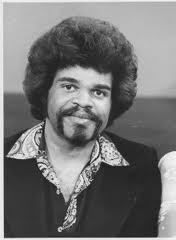
Walter Hawkins

Going Up Yonder, Walter Hawkins Guitar Tabs Letter Sized PDF

Going Up Yonder, Walter Hawkins Guitar Tabs Tabloid Sized PDF

Going Up Yonder, Walter Hawkins Ukulele Tabs Letter Sized PDF

Going Up Yonder, Walter Hawkins Ukulele Tabs Tabloid Sized PDF

If the letter size tabs (8.5″ x 11″) are too small for your eyes, you can either enlarge to tabloid size (11″ x 17″) using an automatic enlarge feature on many photocopiers, or download the tabloid sized versions for printing. The tabloid size tabs can be inserted into a typical letter sized binder on the 11″ size, and folded almost in half to fit. You just open each tab to use it.

Please click here for guitar and ukulele tabs and chords to other songs on this blog.

I picked the choral version above to tab because it was the most “practical” one to tab. You can document something reasonably similar to that version, aside from all the harmony parts you couldn’t sing simultaneously if you were to do this solo. However, if you’re adventurous, you can add your own touches to this song and make it as different from the version above as the version below… all 10 minutes of it! It is soloed by Tramaine Hawkins.

Vodpod videos no longer available.

It’s generally the same style so you should be able to use pretty much the same chords if you sing it using the notes in the tab PDFs. However, it has a complete different swing and swagger. You could add a reasonably facsimile with your singing and some funky strumming if you give it a try.

Enjoy!

Flesch-Kincaid Grade Reading Level: 9.0