I’ve got over 250 cartoon pictures made for Facebook profile pics at the bottom, arranged in alphabetical order with names, which include some modern and some old cartoons.
Nov 6 2010 update:
This article just became much more relevant after Facebook introduced the Facebook Friendship Page feature on Oct 29, 2010.
Many, if not most, Facebook users have more friends on their Facebook Friends list than are good for them. Having more Facebook Friends means more people are watching you. There more people to waste your time, even if just having to sift through their updates to find ones from people you care about. There are also more people who could use something on your profile against you in some way, even if it’s just gossip, possibly from misunderstandings or unintentionally. We’re not even talking about potential creeps and malicious people here, who you don’t know well but had casually added as Facebook friends over time.
So how’s about putting the two together for something useful?
.
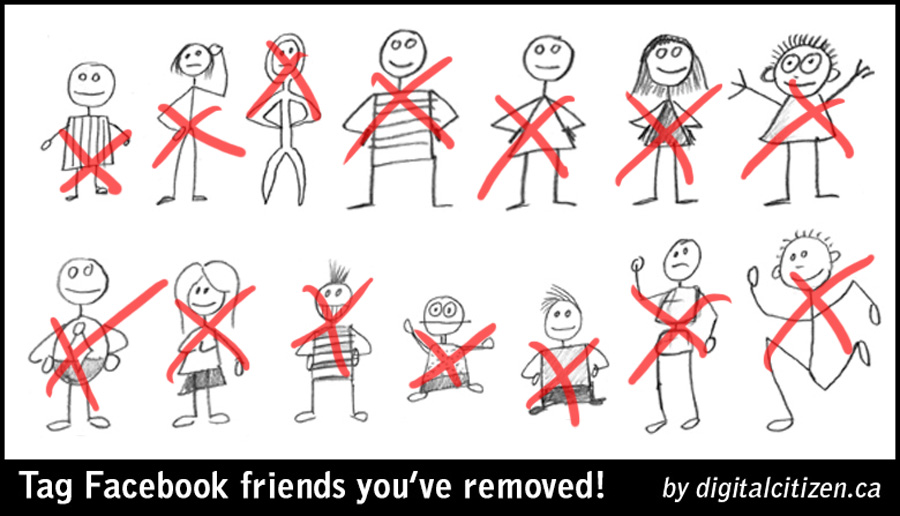
A challenge to remove 5 Facebook Friends and pass it on!
.
These would be “friends” in the loosest sense of the word, of course, not any real friends. I don’t think most people need any help to do this challenge if they want to take it up. That’s how frivolous I think the Facebook Friends thing has become for most Facebook users. However, if you need help or want to do a more serious purging, check out some of my criteria for identifying Facebook Friends you can remove without a lot of consequences.
I took up my own challenge, of course, and went way over 5.
Can you?
If you don’t take the challenge, maybe just ask yourself, can I remove 5 Facebook Friends from my list?It’ll give you an idea of the state of your Facebook Friends list to where it maybe should be.
If you can remove 5 Facebook Friends from that thought experiment, maybe you ought to reconsider, especially now that you know you can. It’s just some clicking and scrolling now. 🙂
Or try it Facebook tagging style! (obviously you can’t tag these friends’ profiles, but you can tag and type in their names)
This article just became much more relevant after Facebook introduced the Facebook Friendship Page feature on Oct 29, 2010.
Most people on Facebook have far more Facebook Friends than friends they have in real life. It is for social networking, after all, not deep friendships. However, every one of those Facebook friends is watching you, in a way, with Facebook’s notifications and updating system. How many stories have you heard about people caught cheating on relationships, lying for jobs or scholarships, and the like, because of something they did on Facebook that was found out by someone else? Even some misunderstandings of your actions and/or comments can be a lot of nuisance. These public mistakes, visible to all your Facebook Friends, are so common now you might even know someone who has been subject to it! But it’s not that a person did something wrong on Facebook that was the problem. It was that it got picked up by someone else who was probably on their Facebook friends’ list. Privacy settings can’t protect against Facebook friends. Well, they can, but if you have settings against Facebook friends, you should just remove them.
Having a Facebook Friends list closer to your real friends list means you have to worry less about who might get you in trouble. You can also misbehave a little bit more without worrying much about the consequences. Don’t kid yourself if you don’t think there are potential consequences. You’ll also waste less time screening through notifications looking for updates by those you really care about in life.
Keeping your Facebook Friends list up to date is the solution to many of the potential problems previously listed. Keeping your Facebook Friends list up to date means removing people from time to time, not just adding them. It is a judgmental act to remove Facebook friends, but seriously, if you made a wrong call, it’s just Facebook friendships. If you’re real friends to any extent in life, they’ll forgive you and you can be Facebook friends again.
So which Facebook friends should you remove? Well, you choose your own criteria. But here are a few I have found useful… in no particular order, and sometimes in combination as they are not absolute.
Do I feel like removing them or care enough to keep them?
I trust my feelings on this one. If I don’t remove them on gut reaction alone, I sometimes override that with other “thinking” criteria below.
Do I know who they are right away?
Some people’s Facebook Friends lists are so large they can really answer “no” to this question for some on their list. “Facebook whales”, or people with over 1000 Facebook friends, may find this criteria interesting to try. If I can’t remember someone on my Facebook Friends list to the extent I know them right away, I chuck them.
Would they remember who I am?
Facebook whales are prime candidates to be tossed under this criteria. It only takes knowing a few hundred people’s names for someone to seem like they remember everybody, but they really don’t. This criteria is a little hard for people to answer “no” to, because it makes them seem so unimportant to someone else. I just suck it up, so if I have any doubt a Facebook Friend might know who I am, I toss them.
Can I name 3 specific things about them not recently on their updates?
Knowing who someone is, is not exactly a deep criteria. If I barely know who a person is on my Facebook Friends list, I often remove them unless I know they will probably be a useful contact for me in the future. These are the people I often added because they might be a useful contact to me in the future, in the first place. I’m not very discerning to add Facebook friends, but I am to remove them.
Do I hide their status updates or block them on my privacy settings?
This one isn’t absolute for me, but I have eliminated Facebook friends on it. With some people, they’re real friends with annoying habits I put up with cause we’re friends. What people put up with in any type of relationship is more than what they’d put up with strangers due to the bond of the relationship. So I hide their statuses but keep them as Facebook Friends. However, if I’m not real friends to some extent, and am annoyed by their status updates, I tend to remove them. I can find other ways to contact them if I really need to. Certainly, if I ever considered blocking people to any extent with my privacy settings, I remove them.
Have I had any contact with them “lately” (like maybe a year or more)?
If I haven’t had any contact with a person in over a year, I usually remove them. Contact doesn’t mean they have to initiate the contact, but that they should respond to contact I have with them. Some people are so bad they don’t do that, in which case, no need to keep them. I can still be friends if we only ever communicate in real life, but there’s no need to have them snoop on me. We can become Facebook friends again later if they appear in my life again. Technical problems I can’t understand is a good way to explain what “happened” to our previous Facebook friendships.
Do they update their Facebook profile?
The main reason I use Facebook was to be in touch with the lives of people. If they don’t update, that defeats this purpose. We likely wouldn’t have had much contact, either, in which case, off they go!
Do I have them to avoid awkwardness?
There are times when I add people to avoid awkwardness, like partners of female friends. After a while, if I don’t develop any type of friendship with those partners, I remove them. They’ll have had their “check-in” time to make sure I’m not after their girlfriends or spouse. I also know I’m not doing that so the partner’s “jealousy” becomes his problem, not mine.
Those are the criteria I have so far. I may have more in the future and will add if so. If you have suggestions, please do share.
The media is also to blame. I’m not sure whether to call the editors who allowed it on their popular news sources “stupid” for running the story like it’s legitimate news, or “smart but immoral” for putting it out knowing stuff like that sells, even if there’s no substance to it.
An above average high school student could have done a better job on such a project! Soroya basically did a bad high school project, if you ask me.
Think of that as a challenge for you high schoolers out there looking for a good Science Fair or other project to do. It’s a project that should be fun and engaging if you’re a Facebook fan, and there should be at least a few of you out there who qualify. Then social network together to pool results and get a decent sample size… which Soroya never even came close. And fix some flaws critiqued here.
Here are a few tragic fatal flaws of that “study”.
Lack of sample size with just 100 subjects
For a site with 500 million users, all Soroya can show for it is 100 users? I know it was an undergraduate thesis, but people used to have to work for their thesis, you know? Also, in the electronic media for this day and age, you’d think she could get more than 100 people to do some tests! If you were going to target 100, call it a term project and leave it at that! Don’t go screaming you’ve got a study on your hands and seek attention.
Oh, wait. I think that’s narcissism!
Which professor let that be called research anyway??? Soroya did publicly admit the sample size was a weakness to the “study”, but that’s not a weakness. That doesn’t constitute a study in this case. If I did a study of 1, I could say the same thing. Of course, nobody would call it a study due to the sample size of just 1. So at how many do you call a study, and why? With that many users and statistically significant polls of merit needing around 1000 subjects, 100 subjects is still way too few to be enough data to call a study!
Soroya also had the audacity to talk about gender differences on a sample size of 50 or so people! Did she ever take statistics? And who vetted this to allow it???
All subjects were 18-25 years old
Since when did humans outside of 18-25 years old not qualify as “people”? You can’t draw a conclusion for “Facebook users” on this demographic alone. The media did that more than Soroya, but she implied it enough not to title the study “18-25 year old Facebook users” for a subject group. And were the 100 selected even representative of all 18-25 year olds? There must be literature to determine that “average” to compare to the test group narcissism and insecurity profile. Hey, maybe 18-25 year olds at York are just more narcissistic and insecure than the typical group and uses Facebook as a symptom of it!
You can make that call. 🙂
Causality… or lack thereof
So are more active Facebook users narcissistic and/or insecure? Or are narcissistic and/or insecure people use Facebook more actively? Does Soroya know the difference? In case she doesn’t, let me clarify. The first is what the media story and her so-called “study” suggests. So everyone who uses Facebook more actively are narcissistic and insecure. The second means only some of the people who use Facebook more actively are narcissistic and/or insecure, and that you can’t tell if they are by the level of their Facebook activity.
But that doesn’t sell or cause a stir or make anybody care as people could have told you that on their own instinct and be right. I’m not even sure if narcissistic and/or insecure people use Facebook a lot because you’d also have to look at the ones who don’t use Facebook and see what portion they make up, never mind those who don’t use it much.
Soroya’s pretentious “research” can’t prove any causality, but she comments on all kinds of causality.
If I had to bet on any connection between Facebook usage and narcissism and/or insecurity, though, I’d easily bet on the second reason. I’d bet narcissistic and/or insecure people use Facebook more actively, not that more active users are narcisstic.
Carefully constructed self-image???
Beyond the ridiculous conclusions drawn by Soroya on causality, she then dared to speculate on meanings of symptoms of narcissism and insecurity. For example, the more active users had carefully constructed images of themselves, to project their best features and hide their worst, or that their profile is nothing really like them. Um. Does Soroya even know anything about Facebook usage?
The active users are the ones who get caught for affairs, missing work, lying to their friends, or just plainly do other less than appropriate things. They’re the ones Facebook etiquette guides were written for, cause they’re so blind to what their actions says about them to know better!
Reasons for Facebook usage unaccounted for
Does Soroya have any idea if people in this subject use Facebook for the same reasons as other demographics by any division? I mean, seniors tend to flock to Facebook and social media to be better up to date and involved in the lives of their adolescent or older grandchildren. Is that narcissism or insecurity?
Or maybe it’s love and caring. But wait, that doesn’t sell.
Some musicians I know add friends like crazy not because they care, but because they can show potential promoters and labels a nice base of fan support. Is that narcissism or insecurity?
Or maybe it’s just good old fashioned business and public relations. But wait, that doesn’t sell, either.
Final thoughts
There are many more problems with Soroya’s “high school project”. I don’t need to bore you with more as I think I’ve discredited it enough to make it worthless. I’ll just throw in a few commentaries to conclude.
Who knew it was so easy to get 15 minutes of fame these days?
I wonder what Soroya thought of Canadians possibly being among narcissistic and insecure people in the world. We have 47.9% of the population connected, a higher percentage than any nation with over 10 million people. We also have the 4th most users in the world (CTV, June 2, 2010), without anywhere near the 4th largest population in the world! Would she have said most of us use Facebook passively like we are on a lot of things? Sure we didn’t all sign up only to be passive, did we?
High school students reading this, or Parents of them, try the challenge I had for high school students at the beginning. Seriously!
And where did Soroya get accepted into medical school? I won’t fault the school in case she didn’t tell them about this work to get in. For the love of God, Allah and the Buddha, I hope Soroya never be allowed to do research until she learns some more about what research is about! Just stick to areas in Med School one only has to memorize things or use one’s hands or something that doesn’t require research type of critical thinking!
But to end positively, congratulations for raising awareness on the Facebook usage issue, Soroya. I just wouldn’t have used sensationalism in the name of research to get credibility and attention.
By the way, Soroya, how did you fare on your own test?
Good luck in Med School. Just don’t tell the media which one accepted you for your school’s sake!
The average Facebook user today has 130 friends. But how many of them would that average user really call a friend? And by friend, I mean just “friend”. I don’t mean anything like “true friend”, “real friend”, “good friend” or the like. Just someone you’d call a friend.
That would be hard to get a consistent answer since different people have different standards for who they call a friend. For some, only the truest of friends get called a friend. For others, anyone who might have followed them on Twitter, or vice-versa, counts as a friend. What we need is some sort of standard definition for “friend” to move this forward.
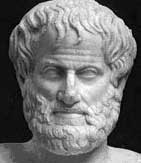
Aristotle
Interestingly, a good definition for “friend” can be found over 2300 years ago courtesy of the Greek philosopher Aristotle (384 BC – 322 BC).
Contactsor those based on usefulness or utility, sometimes known as acquaintance;
Drinking buddiesor those based on pleasure (to use the word conservatively); and
Good friendsor those based on shared virtues.
If we accept all three of these categories to be friends, as Aristotle called them three types of friends, we then have a pretty broad definition of friend, but one which I would be happy to accept. Question then is if these definitions are still broad enough to cover how most people decide whether or not to add others as friends on Facebook. That would take a lot of resources to not only survey but to also verify. I doubt the folks at Facebook would even be able to do the latter conclusively, though I think they have a pretty good idea along the same lines I do.
From what I have seen and read of people and how they use Facebook, as well as who uses them and how, I would argue that a lot of people’s Facebook friends fall outside of Aristotle’s definition. So one would either need to expand Aristotle’s definition of friends to include these slightest of Facebook friends, or these slightest of Facebook friends aren’t really friends.
At first glance, Aristotle’s contactscategory seems broad enough. After all, these slightest of Facebook friends are often people a user would have met only once, if that. They probably serve only as potential usefulness, never mind true utility. That is, they get added cause one never knows when they might be useful, not that they are likely to be useful in some way. Many people have Facebook friends just for the sake of upping their count and feel more people are paying attention to their Facebook activity. Others to avoid some situational awkwardness, like being Facebook friends with someone’s partner just because s/he is the jealous type who wants to keep an eye on their partner’s Facebook activities, when one doesn’t really give a damn if they exist. However, this adding of potentially useful friends can only happen to a point before users would not be able to remember people on their Facebook friends list. That is, if you asked them if so and so were on their Facebook friends list, they wouldn’t be able to tell you with certainty. Or if you asked them the name of certain people who are actually on their Facebook friends list, they wouldn’t be able to tell you anything about them at all, including how they got on that list in the first place.
I don’t know what the approximate average number of Facebook friends one would need to have before they would start forgetting everything about someone on that list, but I can tell you the situation would be true for some Facebook whales. That’s the term Facebook has for Facebook users with over 1,000 friends. Seriously, one thousand people is a lot of people to remember names and something about them. But if you don’t buy that people can remember details about a thousand mostly generic people, perhaps you’d believe the situation of not being able to remember anything about some Facebook friends would be true for those who have reached Facebook’s friends list limit of 5,000. Yes, there are those, too.
Poor Aristotle must be turning over in his grave at what some people constitute as friends today, though I’m sure he wouldn’t expand his definition of friends but rather state those slightest of Facebook friends are truly friends at all.
So after all that, maybe you’d like to weigh in with some opinions with a comments, like how you’d define a friend or why you keep Facebook friends you might not remember anything about, etc. Or maybe you’d just like to take some polls on Facebook friendship below (or see how others responded). The sample from this blog will be skewed because a lot of people come here for Facebook related activities so they tend to be avid Facebook users, but I’m just curious to see.
Other Facebook user facts:
Canada has the 4th highest Facebook user rate per capita as of June 2010 with 47.9% of Canadians having a profile. This trails only Iceland (59.6%), Norway and Hong Kong, in that order.
Canada has the highest Facebook user rate per capita among nations with 10 million citizens or more.
There are 16 million Facebook users in Canada.
Quit Facebook Day is May 31. A measly 30,000 quit worldwide of about 465 million users. Most “I Hate Facebook” type groups and pages are actually hosted on Facebook.
Canada signed up 912,000 new users in May 2010 alone.



 Digital Citizen