This was the first song I ever wrote, with a friend named Lis Soderberg singing it in the recording above. I’m posting the chords and tabs to share with friends who play guitar and ukulele.
The song requires an octave range to sing, and you actually have numerous opportunities to practice your octave singing jumps in the song. Sure beats scales! 🙂
Shakespeare dwells on this, comparing the subject to various aspects of a summer’s day. By nature, I’m a concepts person and not one for details. I can do details if I need to, but it’s not my natural mode. I’m all over the place. So instead of asking shall I compare thee to a summer’s day, I generally said I could do that, or compare you to this and that and those and these things. The kicker, or closing couplet that sums things up, is that I can compare you to all these lovely things, but that none compared to you.
It’s as simple as that.
So if you liked the song and want to learn to play it on guitar or ukulele, please click on one of the links below. Chords and notes are included.
These tabs all fit on one page to avoid the inconvenience of page turns. However, the letter size tabs (8.5″ x 11″) may be too small for your eyes. If so, you can either enlarge to tabloid size (11″ x 17″) using an automatic enlarge feature on many photocopiers, or download the tabloid sized versions for printing. The tabloid size tabs can be inserted into a typical letter sized binder on the 11″ size, and folded almost in half to fit. You just open each tab to use it.
Happy Canada Day! On the day I am writing, that is. You know, for a small population nation, we can compete with anybody when it comes to rock ‘n’ roll and other popular music!
The song is based on the life of transient farm workers, forced to move where work can be found, but its theme is the sometimes temporary nature of human relationships. That’s about as nice a summary as I could find. You listen to the song and read the lyrics in the great fan video below and see/hear for yourself. The song even has subtle horse hoof running sounds! Love it!!!
These tabs all fit on one page to avoid the inconvenience of page turns. However, the letter size tabs (8.5″ x 11″) may be too small for your eyes. If so, you can either enlarge to tabloid size (11″ x 17″) using an automatic enlarge feature on many photocopiers, or download the tabloid sized versions for printing. The tabloid size tabs can be inserted into a typical letter sized binder on the 11″ size, and folded almost in half to fit. You just open each tab to use it.
This song is very singable, in most people voice ranges without requiring a huge range. There are only a handful of chords, and easy ones at that. Nothing complicated about the strumming, either.
The arrangement I have chosen for the tabs include the tune as Neil Young sang it in the video above, without the guitar break. Note the fine differences between the last notes of the third and sixth lines of both verse and chorus. It’s a very fine difference, but that’s why I have included the notes in my tabs. You can pic out the notes to know what I had in mind to go with the chords listed rather than guess, as you often have to do with most online tabs. In some of those cases, there are actual errors people make in singing out of tune, then putting a wrong chord to it, but I’m not going to go further down that road.
However, I have left the verses and chorus in the order Ian Tyson originally wrote them. It starts out with the chorus, then verse, chorus, verse and ending with that beautiful chorus again. Ian and his wife Sylvia sing the song below. It’s a nice version, just a tad harder to tab and sing than Neil’s version with all the country style nuances.
Vodpod videos no longer available.
Between the two videos and tune notes left on the tabs, I hope you’ll be able to figure it all out.
Oh, for the ukulele tabs, I left out the D7 transition chord compared to the guitar version. The ukulele D7 didn’t sound right without much of a bass set of notes.
This folk classic has been recorded by many artists including Neil Young on his 1978 album Comes a Time (Young also performed the song with The Band at the famous The Last Waltz concert, and in his 2005 documentary Neil Young: Heart of Gold), Sarah McLachlan, Hank Snow, The Seekers, Judy Collins, Bob Dylan, Marianne Faithfull, The Searchers, Teenage Fanclub, John Denver, Bobby Bare, The Brothers Four (in an album by the same name), The Kingston Trio, Trini Lopez, Waylon Jennings, Chad and Jeremy, Ulf Lundell, The Tragically Hip, Joan Baez, and most recently, Johnny Cash. It was a hit by Bobby Bare in 1964. It was also a big hit in Norway in 1966 in a Norwegian version: “Mot ukjent sted” by The Vanguards and a big hit in Sweden in 1967 in a Swedish version: “Mot okänt land” recorded by The Hep Stars.
The mentioning of Alberta in the lyrics led it to be considered in a contest to choose a provincial song, which it did not win. Additionally, the song is sung on the last night of the Edmonton Folk Music Festival each year.
This song was used around 2005 for a Claritin commercial, but it was actually from 1972. For those people who cringe at commercials using songs out of context, or that artists “sold out” by letting the songs be used in commercials, this is a reverse benefit. I’d probably would not have known about this song, or at least not for many years later, if I had not seen that Claritin commercial. I still haven’t heard it anywhere but in that commercial and that has gone off the air for many years now.
Beautiful Sunday was written and performed by Daniel Boone and is a great example of a happy pick-up sort of song. You could even substitute “Sunday” for most other days of the week you like to make it for your pick-up song for that particular day. It works for all days except Saturday. I guess you’ll have to remained depressed that day or look for another song. 🙂
You can even change the line about taking a “walk” in the park to taking a “run” in the park as I do, being a runner. I love playing this song on Sunday morning runs if I go through the local park and take music with me.
I liked the song a lot from the moment I heard it and I got chords and notes for guitar. I have since added a ukulele version. The PDFs for them are below.
These tabs all fit on one page to avoid the inconvenience of page turns. However, the letter size tabs (8.5″ x 11″) may be too small for your eyes. If so, you can either enlarge to tabloid size (11″ x 17″) using an automatic enlarge feature on many photocopiers, or download the tabloid sized versions for printing. The tabloid size tabs can be inserted into a typical letter sized binder on the 11″ size, and folded almost in half to fit. You just open each tab to use it.
These tabs should be fairly easy to use. They are on single letter sized pages that fit nicely unlike tabs on web pages that are all over the place. Chord fingerings are included and the chords are right over where they should be for changes. I also have the notes for the tune written out so you can play them to sing the tune right. However, in this multi-media age, tabs should not be without an audio version to further help the user perform them correctly so below, I have the a video of the song as tabbed. I tabbed it pretty much the way it was originally recorded. I just chose a fan video with sites of the city of Sai Gon in Viet Nam because that’s where I was born. The images were from before the end of the Viet Nam War, after which time it got renamed to something crappy.
I hope what’s here is sufficient for you to learn the song and enjoy it.
By the way, how sad for Daniel Boone he has a more famous namesake in North America… but good to know he stuck to his name and did not change it.
If you’re like most people, you’ve never heard of this 1975 song called Ah’m a Niggerman sung by Scatman Crothers.
I can’t even put a link to tell you more about it because I couldn’t find a write up specifically on it!
That’s rare in the world these days!
.
I found this song while looking for Scatman’s version of a Disney song called Ev’rybody Wants to Be a Cat, from the animation called The Aristocatsfrom 1970.
.
I found Ah’m a Nigger Man because YouTube displayed Scatman Crothers videos besides Ev’rybody Wants to Be a Cat. The title Ah’m a Nigger Man was too irresistible to avoid clicking to see what it was about.But yes, this guy did Disney stuff just years before he did this song that’s probably controversial in most people’s books. It has all the controversial elements, not the least of which is using the word “nigger” over and over again. Stuff like that in songs today would get some warning on it, if not for controversy then for political incorrectness, that’s for sure!
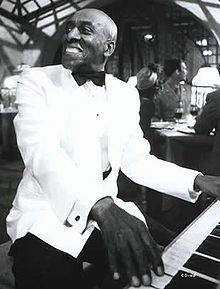
Scatman Crothers
But is it really politically incorrect? That’s my question.
To give you some context, consider these things.
It came from a 1975 stop animation film with an even more controversial title, calledCoonskin. It was directed by Ralph Bakshi, who I have to mention is Caucasian and Israeli since race is obviously an issue of controversy with the song. Ralph had also directed a version of the Lord of the Rings in 1978, way before the recent film trilogy came along.
Scatman Crothers wrote the music, and Ralph wrote the lyrics (though not the scatting, that’s for sure), according to Wikipedia. Hey, best source I could find online… and nobody has put up lyrics for this song!
Seriously! I hardly ever come across any songs I can’t find lyrics for these days! I can’t remember one, in fact!
He seemed to have accepted it as having some value more than money, like maybe a social commentary. This was not some big production or record that was going to sell a lot of copies. I doubt he would have thought this song would have gotten a lot of mainstream air play given its lyrics contained the word “nigger” more times than most racy song these days with that word in it.
I don’t think the song is controversial or politically incorrect. I see the value in the social commentary. I see it as partly reflecting the times and a small part of the history of African-American culture, as it were, without all the spin and sugar coating. For some people, any use of the word “nigger” is just bad, definitely politically incorrect, and that it should be removed from the English language. However, I think that in the “right context”, the word “nigger” has its place. We could not accurately write African-American history without it, for example. It’s all about how you use the word, and unlike a lot of the songs today with the word “nigger” in it, I think it belongs just fine in every single instance you find it in Ah’m a Nigger Man.
Put it another way, if I thought this song were politically incorrect, I wouldn’t dare put it on my blog that some people will inevitably use to form some or all of their opinion of me as a person. If I thought the song controversial, it would never fit in the “slightly controversial” category. It’d be way too much for me to dare to put here!
I also think Ah’m a Nigger Man is a better example of African-American music than most of the songs I had heard which were written and performed solely by African-Americans in the past 20 years. Sure, Scatman didn’t write the lyrics, but the music and scat singing was his. I think if he felt the lyrics were “off”, he’d probably have objected. Put yourself in his shoes and think about whether you’d have done anything if the lyrics had not “felt right” to some extent. I also wonder if he might have had a hand in refining the lyrics if they had not “felt right” to start with. Ralph Bakshi might have “gotten it right” from the start. In my opinion, and I’m not going to try to qualify that opinion, that music and scat singing contribution by Scatman Crothers alone were sufficient to make Ah’m a Nigger Man a more worthy example of African-American music than most of the songs I had heard which were written and performed solely by African-Americans in the past 20 years. Add on a well-matched set of lyrics to the music and you’ve got an even better example!
At the Vietnamese Association of Nova Scotia celebrations, one of their leaders and a friend, Lien, told me about this amazing song called Hello Viet Nam. It is sung by Pham Quynh Anh, with Pham being her last name and Quynh Anh being her first. The Vietnamese who had names outside the ordinal naming system tended to have duo names that were poetic in nature. Marc Lavoine wrote the original song in French called Bonjour Viet Nam. It was later adapted into English by Guy Balbaert, and is known by the Vietnamese title of Xin Chao Viet Nam, though there is not a Vietnamese version of which I am aware. The full story of Pham Quynh Anh and the song’s development is at the end of this post. And yes, Viet Nam is really two words the way the people of the Motherland spells it.
Hey, if your Mother spelled your name in a certain way, wouldn’t you want others to spell it the same way?
Now, I didn’t doubt Lien’s musical tastes or ability to judge music. I had just heard enough songs about Viet Nam over the years and none had really stood out to me. However, just a few seconds into this one, it hit home, I was hooked and knew I had found the best song about Viet Nam I’ve ever heard!
It only took me about 30 years. 🙂
As a relatively new songwriter originally born in Viet Nam, I haven’t even come close to writing a song about Viet Nam. However, I can definitely tell you this one goes in my books as one I wish I had written. Any time you ever meet a songwriter, by the way, ask them for their list of songs they wish they had written. It’s a neat exercise! You can do the same, even if you weren’t one! But here’s Hello Viet Nam.
Tell me all about this name, that is difficult to say.
It was given me the day I was born.
Want to know about the stories of the empire of old.
My eyes say more of me than what you dare to say.
All I know of you is all the sights of war.
A film by Coppola, the helicopter’s roar.
One day I’ll touch your soil.
One day I’ll finally know your soul.
One day I’ll come to you.
To say hello… Viet Nam.
Tell me all about my colour, my hair and my little feet
That have carried me every mile of the way.
Want to see your house, your streets, show me all I do not know.
Wooden sampans, floating markets, light of gold.
All I know of you is all the sights of war.
A film by Coppola, the helicopter’s roar.
One day I’ll walk your soil.
One day I’ll finally know your soul.
One day I’ll come to you.
To say hello… Viet Nam.
And Buddha’s made of stone watch over me
My dreams they lead me through the fields of rice
In prayer, in the light…I see my kin
I touch my tree, my roots, my begin
One day I’ll walk your soil.
One day I’ll finally know my soul.
One day I’ll come to you.
To say hello… Vietnam.
One day I’ll walk your soil
One day I’ll finally know my soul
One day I’ll come to you
To say hello…Vietnam
To say hello…Vietnam
To say xin chào… Vietnam
The song is about a Vietnamese immigrant who has never had a chance to know his/her home. S/he may have been born in the land to which his/her Parents immigrated, or may have been too young to remember when s/he left the country in search of a better life, most likely as one of the Boat People during the mass exodus from the late 1970s to early 1990s. The song captures a curiosity about one’s roots that all immigrants could relate to, though the song is specific to Viet Nam, of course.
Anyway, Hello Viet Nam is the best song about Viet Nam I have ever heard. That much is clear to me. The video I chose is not the official video. Please click here for the official video. I chose it because it shows some footage of Viet Nam about which Quynh Anh is curious to know, although some footage was from the movies. It was also the video with the best audio, and since most of my readers speak English, I chose the English version of the song first. The French version is below. The lyrics below look similar enough to the English that I think the English was a reasonably faithful translation, but I’m no French expert.
Of course, Viet Nam was once a French colony before the Americans came there so it is quite appropriate to have an English/French bilingual version. I’m just surprised the Vietnamese haven’t jumped on it to create a Vietnamese version. They have Vietnamese versions of far more English songs than you know, albeit often with rather adulterous translations (ie. not faithful).
Raconte-moi ce nom étrange et difficile à prononcer
Que je porte depuis que je suis née
Raconte-moi le vieil empire et le trait de mes yeux bridés
Qui disent mieux que moi ce que tu n’oses dire
Je ne sais de toi que des images de la guerre
Un film de Coppola, des hélicoptères en colère
Un jour, j’irai là-bas
Un jour, dire bonjour à ton âme
Un jour, j’irai là-bas
Te dire bonjour, Vietnam
Raconte-moi ma couleur, mes cheveux et mes petits pieds
Qui me portent depuis que je suis née
Raconte-moi ta maison, ta rue, raconte-moi cet inconnu
Les marchés flottants et les sampans de bois
Je ne connais de mon pays que des photos de la guerre
Un film de Coppola, des hélicoptères en colère
Un jour, j’irai là-bas
Un jour, dire bonjour à mon âme
Un jour, j’irai là-bas
Te dire bonjour, Vietnam
Les temples et les Bouddhas de pierre pour mes pères
Les femmes courbées dans les rizières pour mes mères
Dans la prière, dans la lumière, revoir mes frères
Toucher mon arbre, mes racines, ma terre
Un jour, j’irai là-bas
Un jour, dire bonjour à mon âme
Un jour, j’irai là-bas
Te dire bonjour, Vietnam
Te dire bonjour, Vietnam
.
The Story of Pham Quynh Anh and Bonjour Viet Nam
Pham Quynh Anh (born 1987) is a Belgium, ethnic-Vietnamese singer. Her parents were born in Vietnam and immigrated to Belgium, where they met, married and gave birth to Quynh Anh.
When Quynh Anh was 13 years old, her father persuaded her to compete in the TV singing competition “For Glory,” held by Belgium’s RTBF Television. Upon winning the competition, she met her manager, who introduced Quynh Anh to her producer. The producer made possible Quynh Anh’s duet “J’espère” with French-hit singer Marc Lavoine. With “J’espère,” Quynh Anh followed Lavoine on tour to France, Switzerland and Belgium. In 2002 she signed a contract with Rapas Centre, a French-branch of Universal.
Quynh Anh reached international popularity in 2006 with her French song “Bonjour Vietnam,” composed by Lavoine and co-written by Lavoine and Yvan Coriat, when it accidentally appeared on the Internet. It is stated that the people of Vietnam were especially moved by the lyrics and by the ethnic- and cultural-yearning of foreign-born Vietnamese.
Due to its popularity, “Bonjour Vietnam” was translated into English by Guy Balbaert and is called “Hello Vietnam.” The English version is also accompanied with a draft-music video In May 2008, Quynh Anh sang the English version of the song in Paris by Night 92, an on-going Vietnamese language musical variety show. It is claimed that a Vietnamese version of the song will be released.
Quynh Anh will release her first solo project with her first single as the English version “Hello Vietnam.” In an interview with “Oh My News,” Domenech, manager of Rapas Centre, said that Quynh Anh will release her album “Bonjour Vietnam” that will be composed of 15 songs. The album is stated to be released in the near future.


 Digital Citizen