This is my own song, uploaded for the purposes of testing out the SoundCloud music player features newly integrated into WordPress.com blogs. Please do have a listen while reading some general descriptions of the SoundCloud platform following to see those features in action. I wrote the song, but it was beautifully sung by Lis Soderberg, with background parts, recording and mixing all done by the very talented Allister Bradley in the summer of 2008 at Humber College. I just strummed on a guitar. Lyrics are at the bottom. 🙂
Up till Aug 2009, there wasn’t a music player, and not one with social media features, on WordPress.com blogs. If you wanted to share audio files with such features, your best bet was probably to make a “static video”. You know, those “videos” with just one image and sound? Either that or get a space upgrade to be able to upload MP3 files, but there wasn’t a real music player with it
Well, I’m so happy to see WordPress.com finally has a system to integrate sound media files into its blogs the way video was been integrated for a while! They chose SoundCloud.com as their platform, the way they had chosen VodPod for videos.
“[SoundCloud is] …a really useful service that is part Flickr for music, part professional music collaboration hub. Artists such as Beck, Moby and Sonic Youth now use the service to distribute tracks through their blogs and connect with their fans.”
— WordPress.com blog, Aug 13 2009
More than just another free music player, though, SoundCloud has some quite awesome features.
You can leave comments at specific points in the track so you don’t have to go find the time, or try to describe it awkwardly, etc.
You can just click a share button to share it on Facebook and various other social media or social bookmarking sites! That’s very nice!
The sharing of music otherwise among members is similar to the combination of notification on Facebook, and Inbox notifications, on your account via SoundCloud’s side. You can “follow” people like on Twitter to get the info via newsfeed, or get notice similar to a tag or email sent to you and/or your email off the site.
There is even code provided for people to embed it into their blogs and websites, with the player included! That’s really cool!
Their music player is like “fab five” man! You can also control lots of privacy features, and you get your own URL for your account on their site that the public may also visit like how MySpace works.
A free account can be had with 10 tracks for sharing, an Inbox, detailed statistics, viewing, privacy and other features of popular music and video sites at least as good as most of those other sites.
The WordPress folks really picked a fantastic platform in SoundCloud! Well done!
Of course, you should not be uploading copyrighted material that isn’t yours to SoundCloud. That was to be expected. But how nice, was it then, that I just happened to have a song I had written and recorded in the past to use? I don’t devote enough time to my singing/songwriting, and I don’t exactly go pimping my music a lot, even to many of my friends. So here’s hoping there’s something new here for some of them, and you, to enjoy, aside from the tech review.
I will be further checking out SoundCloud’s features in the upcoming weeks and months. It’s given me a whole new set of motivation to write more songs and record more. In the meanwhile, if you want to know more, you can take the tour on their site.
I would highly recommend it!
LYRICS
I could compare you to a summer’s day,
Or, if you prefer, a winter’s night.
I could compare you to the moon unphased,
Or the sun at dawn, noon or in twilight.
All lovely things I can compare you to,
But there’s not one that can compare to you.
I could compare you to the sweetest tune,
Or, if you prefer, the sweetest kiss.
I could compare you to a sacred rune,
Or the lores, that tell of eternal bliss.
All lovely things I can compare you to,
But there’s not one that can compare to you.
Choose any flower that blooms in the spring,
Or any leaf that turns in the fall.
Choose stars, or rainbows, angels, songs birds sing,
Or the sky, or sea – any thing at all!
All lovely things I can compare you to,
But there’s not one that can compare to you.
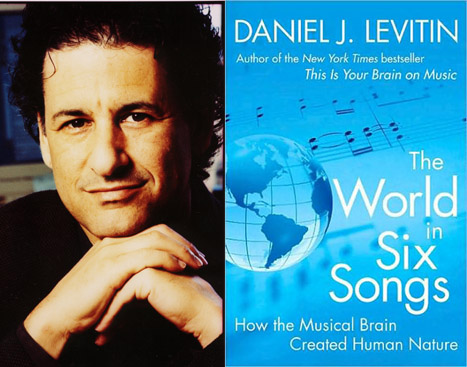
Daniel J. Levitin wrote an absolutely brilliant book called The World in Six Songs, supported by a great website with the many music samples referenced, among other great related material.
My basic paraphrasing of the concept is this. All the songs in the world could be fit into at least one of six categories providing an evolutionary benefit to humanity, often ultimately tied to our social nature.
The book and website offer far more detailed interpretations, of course, but I will expand on my paraphrasing with each post and the associated topic.
In a series of posts, I will describe each of the six categories in brief, one at a time:
I will describe what the categories are about because they are not as limited in scope as the category names suggest. I will then supply one of my choices and ask all readers to do the same if they so wish. In the seventh post of the series, I will offer the chance to put the song choices all together so readers can read the entire set on one post. I do this because it would be a long post to describe all six categories at once, but to have all the answers in one place might be nice.
.
This post focuses on Songs of Love
July 30th add-on in italics, from Dan Levitin in a summary article
Love songs serve as an expression of emotion, commitment, and honesty. They play a role in mating and bonding. Love provides an evolutionary advantage because it is altruistic, and corresponds with commitment, which leads to better care of children, which is an obvious fitness advantage. With altruism, the greater good comes before the individual, strengthening infrastructure.
Some may question whether there would be much to say in this chapter because intuitively, I don’t think anybody would say they couldn’t name a “love song”. But that’s a love song in their definition, or a romantic love song, not a song of love as Daniel defined it, backed up by some very prominent names. Indeed, the chapter opens with a quote by Frank Zappa that says “Romantic love songs are a sham that perpetuate a lie on unsuspecting young kids”.
Somehow, I don’t think it stops at young kids.
Frank further follows up with “I think one of the causes of bad mental health in the United States is that people have been raised on ‘love lyrics’.”
Polar opposite Joni Mitchell then jumps in to agree with “There’s no such thing as romantic love. It was a myth invented in ancient Sumeria, repopularized in the Middle Ages, and one that is clearly not true. Romantic love is all about ‘I’ this and ‘I’ that. But true love is about ‘other’.”
And if I were anybody, I’d have jumped in to agree, but I’ll just have to agree on my blog. Songs of love by Daniel Levitin’s theory, and in the purest sense of the word, are about intense feelings for another of any kind. That could be parental, friends, god (no caps on purpose), country, idea, etc. It is about something external and bigger than the self, and bigger than even we, never mind just me, like so many love songs are often about. And it is this something bigger and external to the self, the ideals we have in many aspects of life that develops pillars in our lives and society, that help create the social structure necessary for society and raising children (along the same belief that it takes a village to raise a child).
A note should be added here to clarify that while religion is also about something bigger and external to the self, it is about a search for meaning. Love songs are about the motivation and the doing, without that greater meaning of placement, using the something greater towards creating a favourable social architecture for increasing our chances of survival and evolution.
As for how romantic love songs fits into all of this, they are just a smidgeon of songs of love, and likewise, romantic love of love in the greater sense. The world is full of bad love songs, then, if you think of romantic love songs as representatives of the love song category, for the most part. They are still important, but think of it as strength in numbers rather than true strength within for the few. Many romantic love songs are just for the here and now, to get us there and hold us a bit until either another one comes along or something else comes along to help us. I don’t mean their popularity on the charts, but rather their relevance to us for a moment. They are also an “honest” signal harder to fake than language because it’s harder to hide an emotion via a song than in speaking a phrase. By the way, keep in mind we have only had recording devices to use songs the way we do today in about 0.0001% of our evolutionary history, so the honest signal theory that we sang the songs ourselves to communicate, comparing to speech to say something, applies well to our history. Most of our ancestors could not request or play a song for someone like we can today.
To defend his point that romantic love is just a tiny part of love in the bigger sense, Daniel Levitin presented a very compelling physiological and neurological argument of how romantic love is just a chemical high. In contrast, the idea of love being about the “other” and not the self, is what truly drives us to raise our children, who take far longer and far more resources to develop into a self-sustaining adult than any other babies in the animal kingdom. Romantic love songs only use the “conveyance” component of language, the easy one to get to the here and now, not the computational component that is much longer term. Romantic love songs are about the moment, not the long-term future.
Love, in the real sense of the word that is about the “other” and not the self, is easily just as deep as religion, and the chapter shows it with a lot of deep material touching everything from the psychological, physiological, neurological, philosophical, evolutionary and other aspects of love. It is not challenging to read for reading level required, but the ideas will take time to think about and absorb if you read it seriously. Religion only seems deeper because of its theoretical boundlessness, and because simple romantic love songs have made love seem so trivial. However, I don’t think anybody would disagree that love is what ultimately binds us all together most, and to that end, the Beatles may well have been right that all you need is love. Well, maybe not all as life might still be difficult if that was all you had, but for sure, love is the most imporant thing we need.
Audio sample of songs from the Love chapter in The World in Six Songs can be found on the website. No direct link was available, but click on the Songs menu option and appropriate page number range link carrying pages 229 to 289. Please note that not all songs are meant as samples of Love songs. Some are just referenced material in the book text.
.
Author Daniel Levitin chose
Bring ‘Em All In, by the Waterboys, not just as an example of a love song suitable to his theory, but also as the ultimate love song to fit the example (lyrics).
.
My choice for Song of Love is
We are the World, written by Michael Jackson and performed by a collective of artists (listed with lyrics).
Of the many songs I love as love songs, all are of the romantic love song nature that is but a petty part of the songs of love defined by Daniel Levitin in his World in Six Songs theory. It is really tough to think of a song that unites us all in a caring cause, for the future as much as now. However, I think this one does pretty well, talking about the world, the children, in a call to action (now) for a brighter day (future). I am just very saddened listening to it to see how far Michael Jackson has fallen from a pop star with the often cited Greatest Album of All Time in Thriller (MTV, even in Apr 2009), to someone who could write a song as this, to what he is now.
.
What is your choice for Song of Love?
Please leave your choice as a comment.
Lyrics and YouTube/audio link would greatly enhance your answer so readers can know more about your choice. They are not necessary, though, and not possible if no lyrics or version exist.
Daniel J. Levitin wrote an absolutely brilliant book called The World in Six Songs, supported by a great website with the many music samples referenced, among other great related material.
My basic paraphrasing of the concept is this. All the songs in the world could be fit into at least one of six categories providing an evolutionary benefit to humanity, often ultimately tied to our social nature.
The book and website offer far more detailed interpretations, of course, but I will expand on my paraphrasing with each post and the associated topic.
In a series of posts, I will describe each of the six categories in brief, one at a time:
I will describe what the categories are about because they are not as limited in scope as the category names suggest. I will then supply one of my choices and ask all readers to do the same if they so wish. In the seventh post of the series, I will offer the chance to put the song choices all together so readers can read the entire set on one post. I do this because it would be a long post to describe all six categories at once, but to have all the answers in one place might be nice.
.
This post focuses on Songs of Religion
July 30th add-on in italics, from Dan Levitin in a summary article
Religious ceremonies and ritual go hand in hand, with music frequently accompanying a ritual. Music acts as a retrieval mechanism to guide the movements and words of a particular ritual, and ritual can allow people to stop worrying and focus on the task at hand. Music is also tied to religious ceremonies such as weddings and funerals where acts can be performed as a community, providing social bonding.
Songs of religion are not simply songs about religion. In fact, the songs of knowledge post showed how the Oral Torah was really a song of knowledge, not religion, even if its lyrics were all about religion. Songs of religion are really ritual songs intended to give meaning to something greater than just the subject itself. Furthermore, this meaning is attached to a belief system that establishes some sort of “social” order, both, less and more than us. It is this search for meaning, a self-conscious act of awareness on our part, for our place in this order which truly separates us from the rest of the animal kingdom. However, it is what we embrace in this search, in turn, that has benefited us in evolution.
In our search for something greater that is part of our religious beliefs, we embrace sets of rituals that exist in all religions. Religion gives meaning to these rituals that have little meaning on their own otherwise. Just look at rituals in religions foreign to you and see how you feel about them compared to those in your own. However, those not familiar with your religion would have no different overall reactions to rituals in your religion. Pages 194-195 has a great list of 11 rituals universal to all religions, though, which is an absolutely fascinating read!
Now, the rituals of religion come in two flavours: self-rituals and group rituals. Self-rituals tend to be of the type which promotes survival, like not murdering others or coveting their mates which could cause conflict among us that is not good for survival. Rituals also mean the actions get repeated, which helps survival if all the actions were good for survival. As for religion’s role, religion gives self-ritual self-meaning, like what it could mean for someone in their current and/or afterlife. Religion also monitors external and internal states for danger in guiding rituals to be done at various times throughout life.
Like it does for self-rituals, religion gives group rituals group meaning and monitors internal and external states to the group. This is the more important benefit to evolution when compared to the self. This is because group rituals promote group activities, which not only protect us from ourselves but also from other factors of harm to us, and better than individuals could do alone. Group rituals are essential to religion because one cannot find a place within a greater social order if there were no one or nothing else around oneself to create this social order.
Finally, all rituals, with their meanings given by religion, are intended to reduce ambiguity in life by changing the state of the world into something more exacting. It also lets us move on with our lives with the direction given so we don’t subject ourselves to situations not beneficial to our survival.
At this point, I would like to insert a note to say that while the general big picture descriptions of religion described in the World in Six Songs are beneficial to evolution, when it comes to the main organized religions in human history, I’m not sure I would concur. I think modern organized religions have become so warped from the spirit of religion’s concept I would debate whether it has had net benefit on humanity or net hindrance. Ironically, this has been since we supposedly have become “civilized”. So much wrong has been done in the name of organized religion, or hidden by it, that I really do think we could do better without it. I think we’d be better off if we only embraced religion in its intent rather than its meanings that it often has no business giving. Organized religion is just a pretense to guide us as if those leading it knew what were happening when they have no idea.
Songs associated with rituals mean there is a time and a place for songs of religion, with consequences. Thus, funeral and wedding marches count, but not national anthems or Christmas carols. There are places and times for national anthems, football fight songs and Christmas carols when you could break out in one or the other, and there wouldn’t be much problem. Try the same with funeral or wedding marches, especially the former, and there might well be. Children’s songs where participants move parts of their body selectively also count as songs of religion because of their ritualistic nature. This practice to develop motor coordination through repetition when we are young and learning is also of benefit to us evolutionally. Finally, gospel songs are religious songs, and it was mentioned that Dan Dennett had suggested that atheists should have pro science gospel songs as atheism doesn’t have gospel religious songs — a thought I, both, like and found tremendously amusing.
Audio sample of songs from the Religion chapter in The World in Six Songs can be found on the website. No direct link was available, but click on the Songs menu option and appropriate page number range link carrying pages 189 to 228. Please note that not all songs are meant as samples of Religion songs. Some are just referenced material in the book text.
Overall, I found this chapter on songs of religion to be very profound and deep, as it should be considering the subject matter. Despite the long post, I have only touched upon the many things Daniel Levitin touched upon for which there is much to think about each.
.
Author Daniel Levitin chose
.
My choice for Song of Religion is
Lacrymosa, by Wolfgang Amadeus Mozart from his incomplete Requiem (funeral music), K. 626, that is magnificent from beginning to end.
It seems the current opinion is that only the first 8 bars were actually written by Mozart, with the rest under instruction for completion. However, listening to it, sounds like the instructions were pretty complete to me.
I have had the pleasure to sing this piece in choir and, well, let’s just say when you hear this piece with all the parts around you, singing one part, that’s when you really “get” the genius of Mozart.
I have also heard this version sung whereby the choir stopped at where it was thought Mozart stopped composing (I believed that version was about 8 bars into the vocal section), and they just stopped dead and walked off. It was so moving, the reminder that Fate doesn’t care for what we do and stops where it wants, that I cried in realizing the finality of it all.
Andrew Lloyd Webber’s Pie Jesu from his Requiem is also a favourite of mine. I have also sung this in choir. Sissel Kyrkjebø does a beautiful job here!
.
I don’t know what to say about all the funeral music selections here. I LOVE classical funeral music for some reason. It gives me such peace and lets me focus incredibly well. I especially like writing anything I need to focus and be concise on to it. Obviously, I don’t blog to it.
.
What is your choice for Song of Religion?
Please leave your choice as a comment.
Lyrics and YouTube/audio link would greatly enhance your answer so readers can know more about your choice. They are not necessary, though, and not possible if no lyrics or version exist.
Daniel J. Levitin wrote an absolutely brilliant book called The World in Six Songs, supported by a great website with the many music samples referenced, among other great related material.
My basic paraphrasing of the concept is this. All the songs in the world could be fit into at least one of six categories providing an evolutionary benefit to humanity, often ultimately tied to our social nature.
The book and website offer far more detailed interpretations, of course, but I will expand on my paraphrasing with each post and the associated topic.
In a series of posts, I will describe each of the six categories in brief, one at a time:
I will describe what the categories are about because they are not as limited in scope as the category names suggest. I will then supply one of my choices and ask all readers to do the same if they so wish. In the seventh post of the series, I will offer the chance to put the song choices all together so readers can read the entire set on one post. I do this because it would be a long post to describe all six categories at once, but to have all the answers in one place might be nice.
.
This post focuses on Songs of Knowledge
July 30th add-on in italics, from Dan Levitin in a summary article
Historically, songs have been used to transmit various information such as religious texts, survival and life lessons, and even the ABCs. Studies have shown information set to song is memorized more reliably than when simple rote memory is used. Increasing the reliability of transmitted information provides the next generation with valuable information.
Songs of knowledge are aptly named because they preserve and spread knowledge. However, it’s not that simple since we have language, which is a far more versatile means of conveying and preserving language than music, having far fewer limitations in composition. Language, though, doesn’t have nearly the mnemonic power of music to help preserve the knowledge being conveyed. This was of great value before we had written language, though it should be pointed out that Daniel Levitin did not pick sides whether the musical or linguistic brain came first. Rather, he favoured the likely to be correct idea they developed together. Another limitation of language is that it can be too specific.
For difficult or awkward situations, a little ambiguity afforded by songs might actually help dissolve conflict, or at least manage social uncertainty, benefiting survival. Songs are also more genuine because it is partly an emotional output, not a rational one, and not as easily to fake.
Finally, knowledge songs are performed by many people, and often. That is partly how they are maintained as per oral history. You can neither preserve nor spread songs if only one person knew it and/or it were rarely performed. Too risky to lose those songs and their knowledge forever. These songs are also sometimes sung in groups, which helps identify those who can bond into groups that increase chances of survival and promote evolution.
As for some examples, many kids’ songs like those which teach counting and the alphabets are excellent, albeit simple examples of knowledge songs. With English as my primary language, the Alphabet Song comes to mind.
.
This is the same tune as Twinkle, Twinkle, Little Star by the way, although the latter helps teach things like rhyme rather than an alphabetical sequence… kind of like the video link demonstrates hilariously.
.
However, on the other end of the spectrum is the Oral Torah, which, as a Christian metaphor if you are not familiar with it, is a bit like reciting the Bible by memory by song. That’s not entirely accurate, with the history of the Oral Torah being very interesting compared to the written Torah, but you get the idea. Despite the religious text, though, the “song” is meant to preserve and spread knowledge. Religious songs, covered next, are more about rituals. Finally, in the middle are songs like those sang by traveling minstrels and pop songs that tell of historical events like Gordon Lightfoot’s The Wreck of the Edmund Fitzgerald.
Audio sample of songs from the Knowledge chapter in The World in Six Songs can be found on the website. No direct link was available, but click on the Songs menu option and appropriate page number range link carrying pages 137 to 188. Please note that not all songs are meant as samples of Knowledge songs. Some are just referenced material in the book text.
Daniel Levitin talks more about the impact of songs in our lives, including songs of knowledge, in this video below.
This was a really tough one for me to answer because I don’t live in a place and time of traveling minstrels and some choices I had thought about were covered (Wreck of the Edmund Fitzgerald). However, after thinking long and hard, I decided on my choice above. While not a full historical account by any means, Joni at least wasn’t there like most of the minstrel singers would not have been at the events about which they sang.
.
What is your choice for Song of Knowledge?
Please leave your choice as a comment.
Lyrics and YouTube/audio link would greatly enhance your answer so readers can know more about your choice. They are not necessary, though, and not possible if no lyrics or version exist.
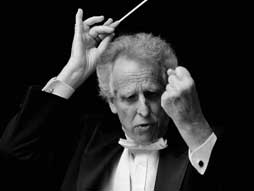
Benjamin Zander is conductor of the Boston Philharmonic. he is the person who makes no sound but is most responsible for an orchestral performance, because he depends on his ability to make other people powerful for his power, to paraphrase him. In this delightful, funny, insightful and very moving and invigorating talk, he helps one appreciate classical music in a basic way everyone can relate to, not some technical way. Throughout, he inserts various insights, life stories and life philosophies that will touch you in profound ways.
Besides the conductor definition above, Benjamin talks about qualities of leadership, how music playing progresses from technical to artistic, the development of a music piece to create tension and release before bringing you home, how there’s no such thing as a tone deaf person, and a few life philosophies like the ones in the title. The “shining eyes” refer to how to judge your life success by the number of people’s eyes around you sparkling, created by you awakening possibilities in them. That is, using the question who are you being in life, that the eyes of those around you are not shining, as a check and motivation to be more to the world with your life.
You know, I was eating a large bowl of Vietnamese hot and sour soup I had made for supper while listening to this. I picked it out because I expected it to be a charming and funny talk with some insight, already a fan of classical music. However, I was laughing out loud quite a few times in the first two thirds of the talk, and then had my brains and heart blown out of their casings with the music, beauty and insights and stories of the last third. There were so many tears streaming down my face so quickly that by the end, I could taste the salt from my tears in my soup in a new recipe, apparently!
I don’t think I’m spoiling anything for you by telling you that story, but rather just preparing you for it if you so choose to watch the video. None of what I said made you cry, after all. What Benjamin will tell you, though, especially with regards to the title, will. He also gives one last practical piece of advice about not having to be perfect to uphold your philosophies, but just trying to “live into” those philosophies as best you can.
A two life philosophies talk! Meaning I have two new life philosophies because of it. Just amazing…


 In a series of posts, I will describe each of the six categories in brief, one at a time:
 Digital Citizen